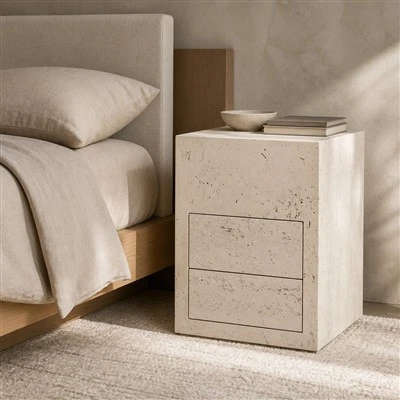
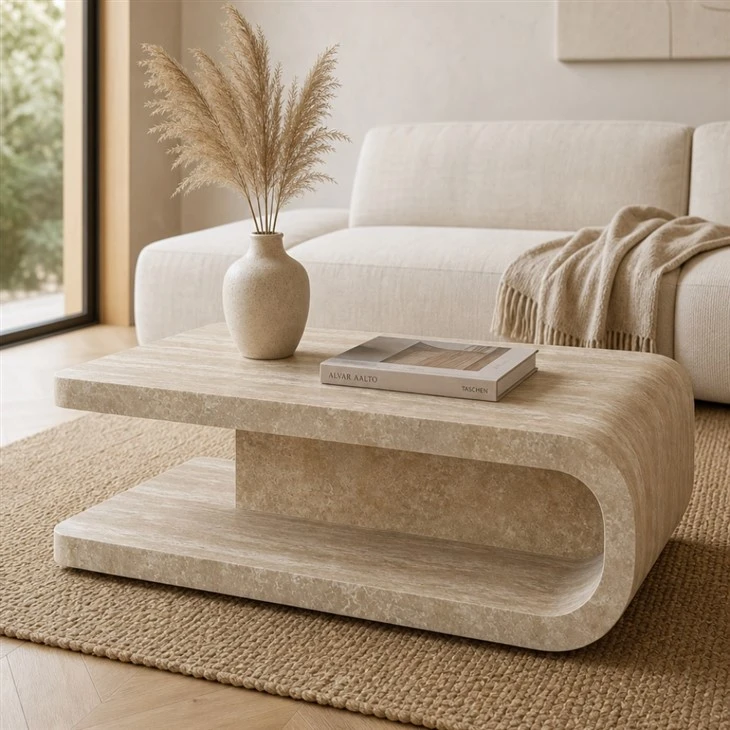

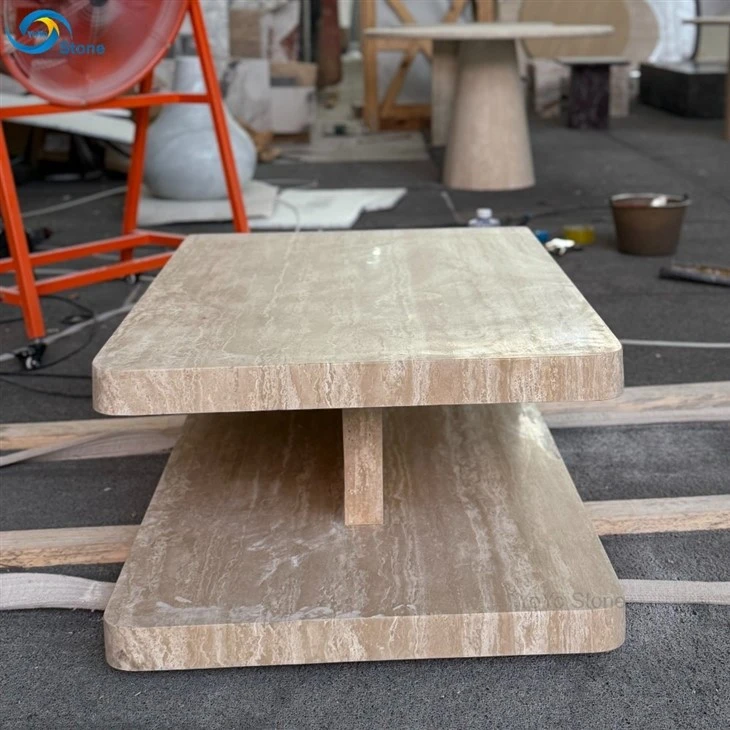
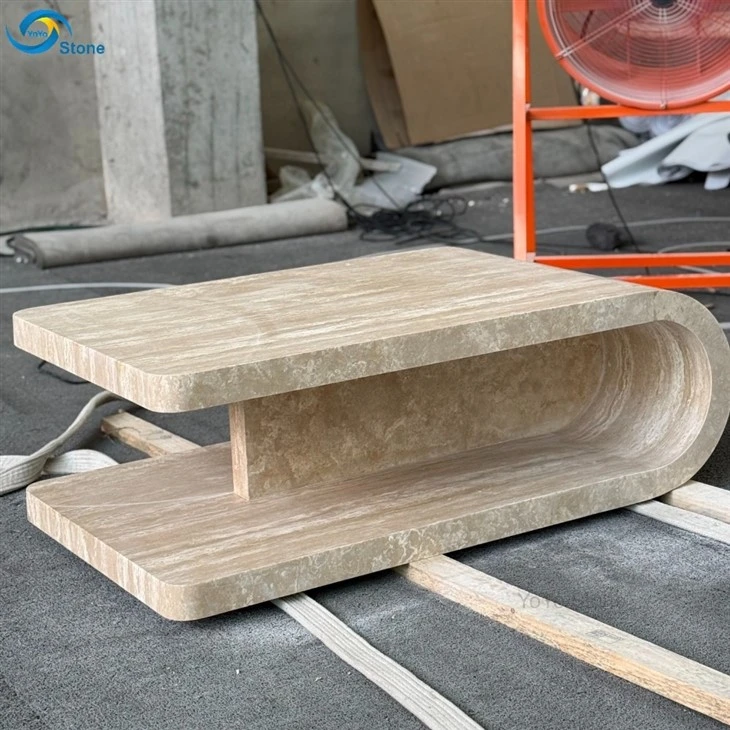

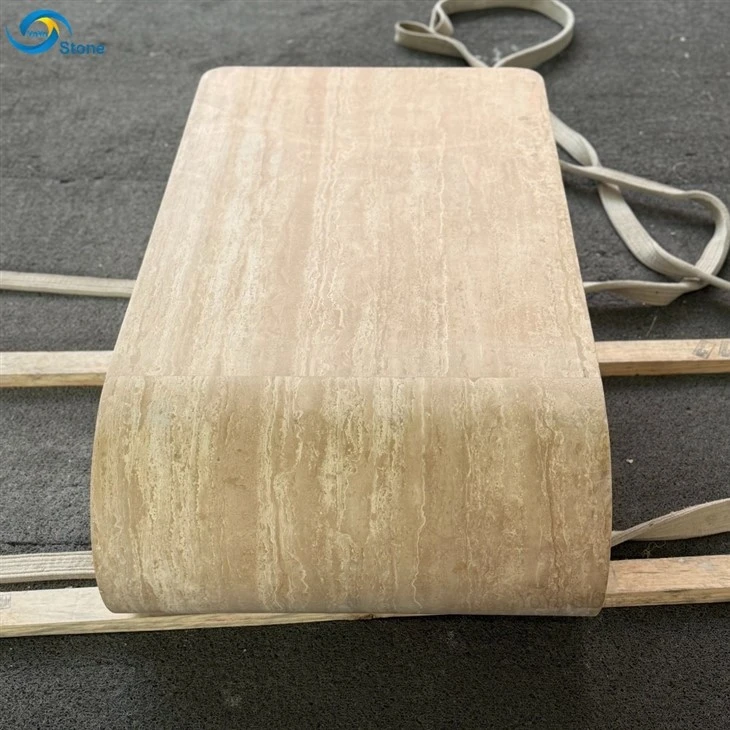
White Travertine Table
White travertine table
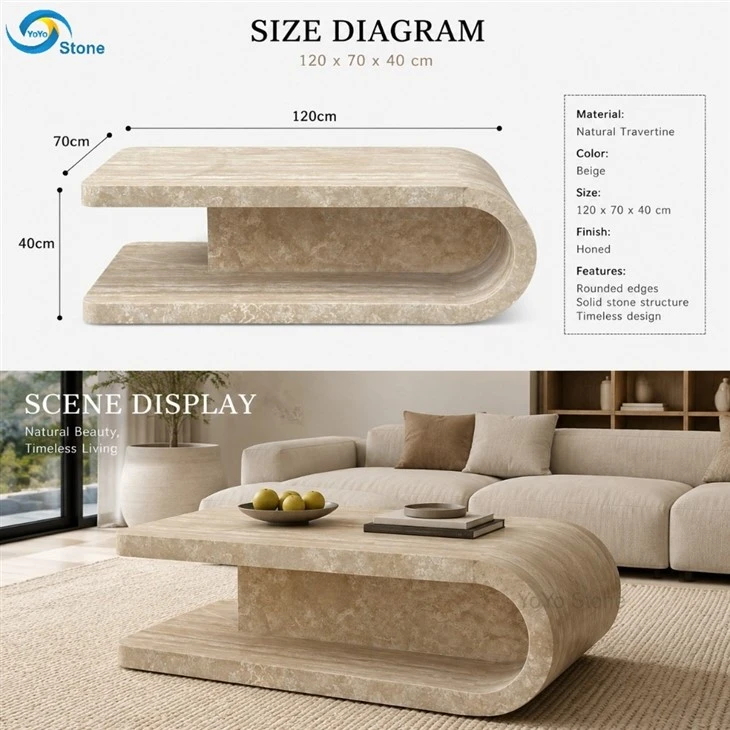
Material: Natural Turkish travertine
Size: 1200x700mm, 1800-2400 x 900-1000mm, or as requested
Thickness: 20mm, 30mm
Finished: Honed, polished, brushed or leathered
Application: Coffee table, dining table, hotel, villa, home bar, furniture wholesale
- Fast Delievery
- Quality Assurance
- 24/7 Customer Service
Product Introduction
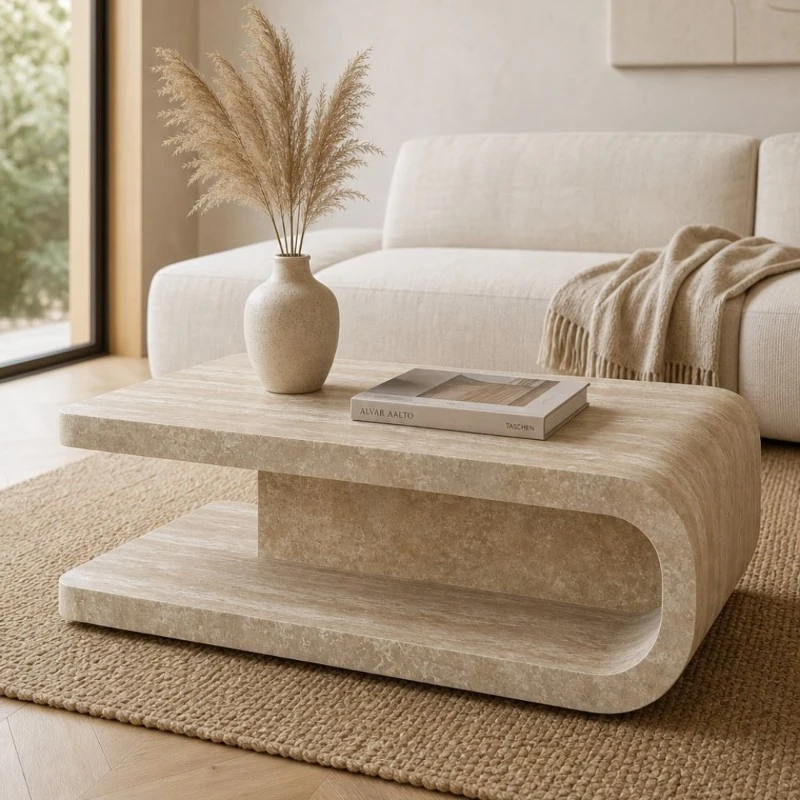
A white travertine table is not bought by colour, because the colour is the least variable thing about it, and the three decisions that actually define the piece are all decisions about the holes. Travertine is a sedimentary limestone laid down by mineral springs, so its structure is a banded calcite ground carrying open voids and bedding planes, which means the same block can produce a top that reads as cloud or as straight banding depending on how it was cut across the bed.
The first decision is that cut: cross-cut, which opens the figure into the familiar flowery cloud, or vein-cut, which runs the banding in parallel lines across the length, and the two are quoted and shipped as different tables from the same block. The second is the void treatment, and a white travertine table is supplied open-void as quarried for a sculptural top, cement or grout filled for the standard furniture specification, or colour-matched resin filled for a hospitality top that has to be wiped down every service, with the void class and the fill declared per block because a heavily voided block will not make the same top as a tight one.
Products Description
| Parameter | Specification |
|---|---|
| Product Name | White Travertine Table, also traded as a white travertine coffee table |
| Stone and Origin | Natural Turkish travertine, a sedimentary limestone rather than a marble; white, beige, red and super white travertine from the same block channels; brand YoYo Stone |
| Cut Direction | Cross-cut for the cloud or flowery figure, or vein-cut for parallel banding; the cut is written on the order because it decides the look of the top |
| Void Treatment | Open-void as quarried, cement or grout filled, or colour-matched resin filled; the void class and the fill are declared per block before cutting |
| Top Thickness | Solid at 20mm and 30mm, or laminated where a thicker face is wanted on a lighter top |
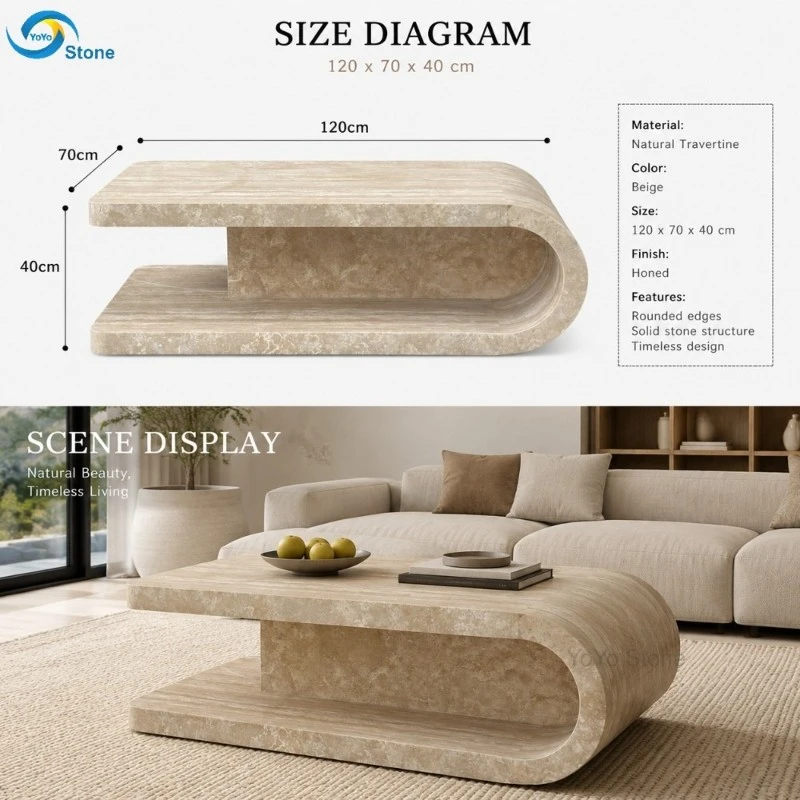
| Standard Sizes | Coffee 1200x700mm, side 500x500mm and 600x600mm, dining 1800 to 2400mm by 900 to 1000mm; any size customized against your drawing |
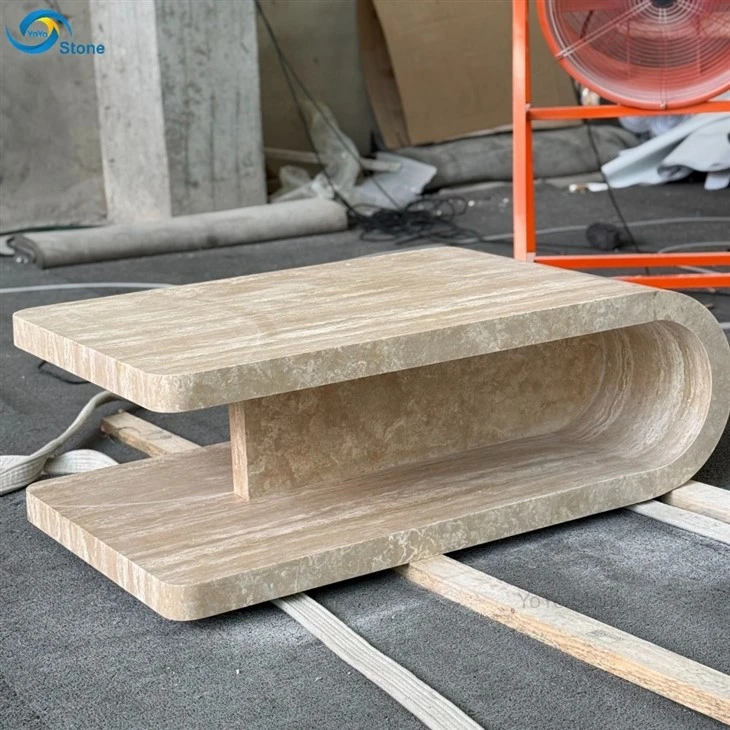
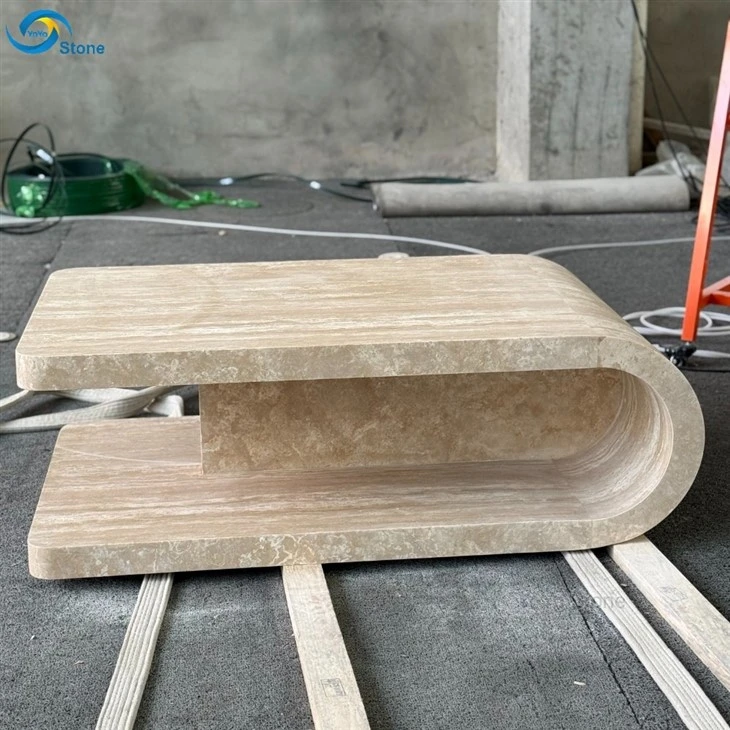
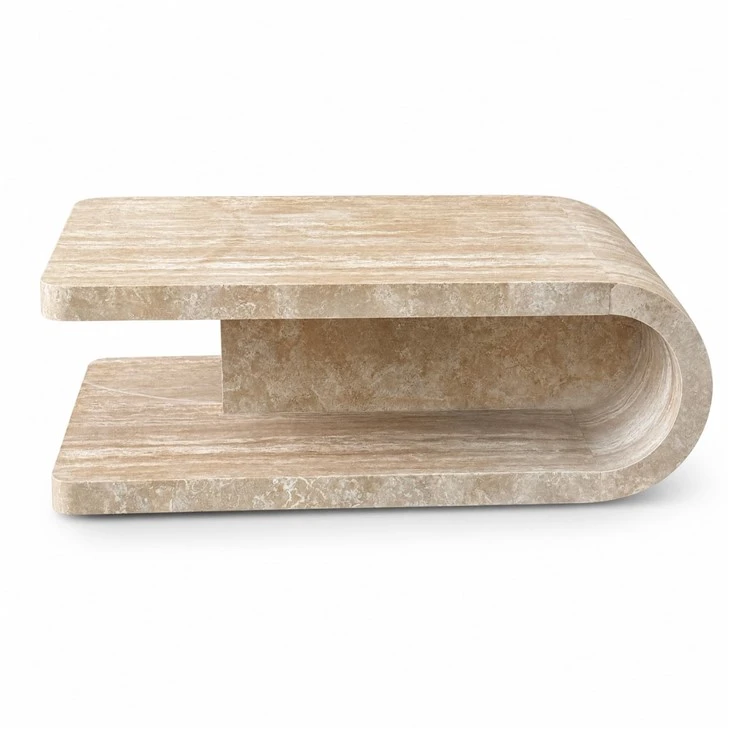
| Table Shape | U-arch double deck, round, oval, rectangular, square and irregular; custom shape cut to your drawing |
| Top Edge | Bullnose, eased, beveled, mitred or laminated; the void structure is exposed at every cut edge and the edge is filled to match the face |
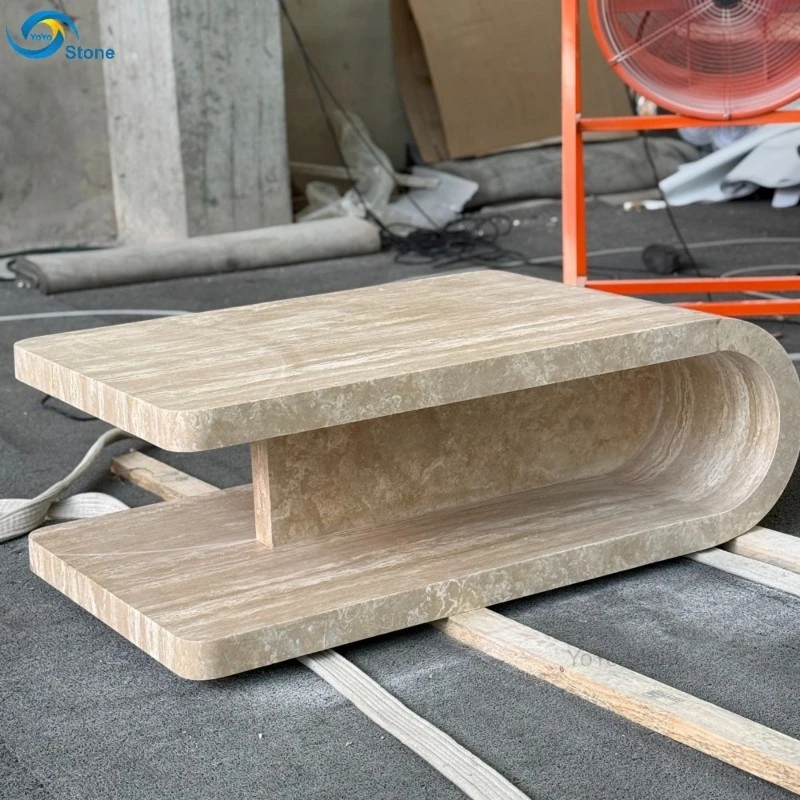
| Underside | Sawn and open as standard, which is where the true void structure of the block shows; a filled or sealed underside is quoted on request |
| Surface Finish | Honed as standard, with polished, brushed and leathered on request |
| Sealing | A penetrating sealer is applied to every honed top before packing, because travertine absorbs more than marble and a dining or bar top cannot be left open |
| Base and Fixing | Solid travertine pedestal, plinth or U-arch base; the top is locked to the base with concealed stainless pins and colour-matched adhesive, so the unit ships flat and does not fold |
| Stability | Base footprint checked against the top weight and the overhang on the drawing, with a counterweight or a wider plinth quoted where the top cantilevers |
| Density and Absorption | Density 2.35 to 2.50 in g/cm3; absorption 0.5 to 2.5% by mass, which is why sealing belongs in the specification |
| Compressive and Flexural Strength | 60 to 120 MPa compressive and 6 to 12 MPa flexural, on a dry specimen |
| Hardness (Mohs) | 3 to 4; travertine is a calcite stone, softer than granite and etchable by acid |
| Weight | About 42 kg for a 1200x700x20mm top and 63 kg at 30mm at 2.45 g/cm3; the base adds 55 to 120 kg |
| Packing | EPE and foam corner protection in a hard carton, then an enclosed fumigated crate to ISPM 15; the top and its base are crated apart with the void class marked |
| MOQ, Delivery, Payment and Port | One unit minimum; 15 days, or as agreed; 30% deposit by T/T, with the 70% balance against the B/L copy; REACH (EC) 1907/2006 declared on the invoice; Port Xiamen |
Quality Control & Inspection Standards
Cut direction and void class, declared at the block
The block is wet down and read before the first cut, because the decision that matters is which face opens the figure and which section opens the banding, and a block chosen for its cloud will not produce a vein-cut top.
Fill depth, colour match and shrinkage
A filled top is judged on the fill rather than on the stone, so the fill is checked for depth against a straight edge, for colour against the surrounding ground, and for shrinkage after curing.
The edge, the underside and the sample
Every cut exposes new voids, so the top edge is inspected after profiling to confirm the holes have been filled and finished to the same standard as the face, and the underside is left open as the honest face of the block.
Sealing, flatness and the base footprint
A honed top is sealed before it leaves the works, since an unsealed travertine drinking surface will take a wine ring, and the sealer used is named on the packing list.
Products Application
Typical Project & Application Scenarios
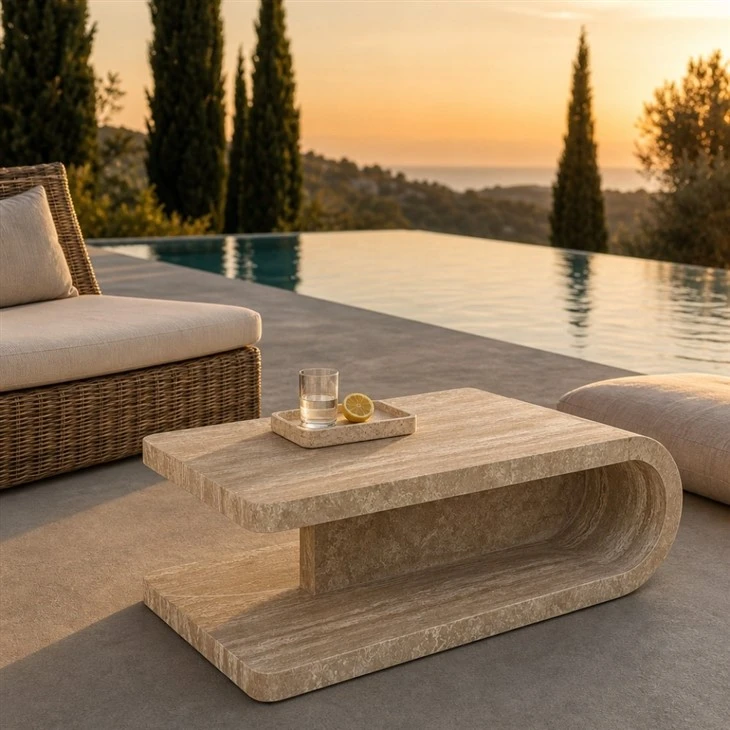
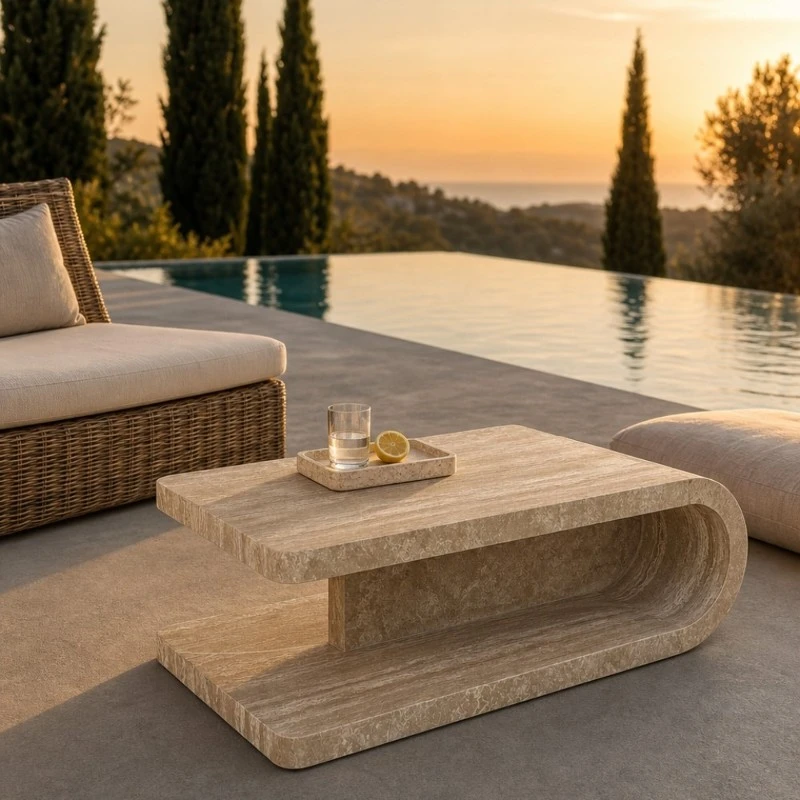
Living room white travertine tables
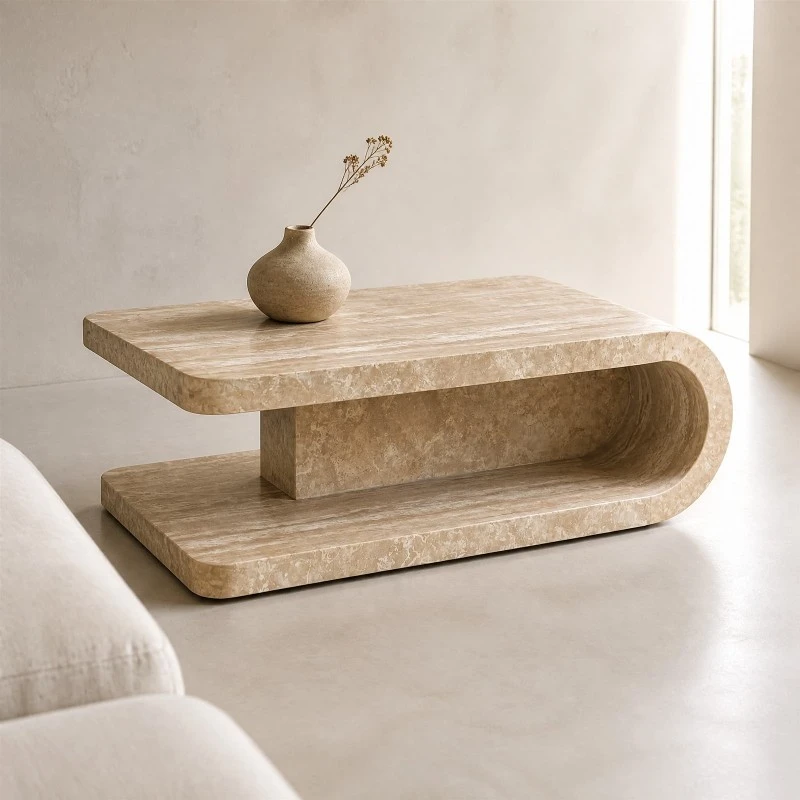
Cross-cut and used as a low centre table, this is the piece that stands in the middle of a seating group rather than against a wall, which is why the top is read from a downward angle across its whole face instead of along one edge.
The 1200x700mm top sits on a U-arch double deck base, so the base reads as an arch from every seat in the group and the second deck supports the top along its length rather than leaving the 1200mm top carried by its own edge alone. The figure is cross-cut with the voids filled: cross-cutting lifts the bedding head-on so the figure carries the full face, and filling closes the pockets so a low table does not present an open void exactly where a glass is set down or a spill lands. At 1200x700mm it is sized to be reached from all four sides by a large seating group, not to be sat at from one.
Dining tables for villas and apartments
At a dining table the top is read from a seated eye rather than from above, so the cut follows the length of the table: vein-cut banding runs with the seating, and the figure holds from one end of the run to the other instead of changing direction mid-table. Tops are cut between 1800 and 2400mm and set from the room and the number of covers rather than from a stock length, which is why a villa dining room and an apartment dining area take different tables from the same stone.
The base is a pedestal or a twin plinth, and the two figures that decide whether the table works are the overhang at each end, where knees have to be clear, and how much top is left unsupported beyond the base. The base footprint is therefore checked against the span before cutting, and it is the base position that is drawn, not only the top size.
Hotel lobbies, lounges, home bars and entrance halls
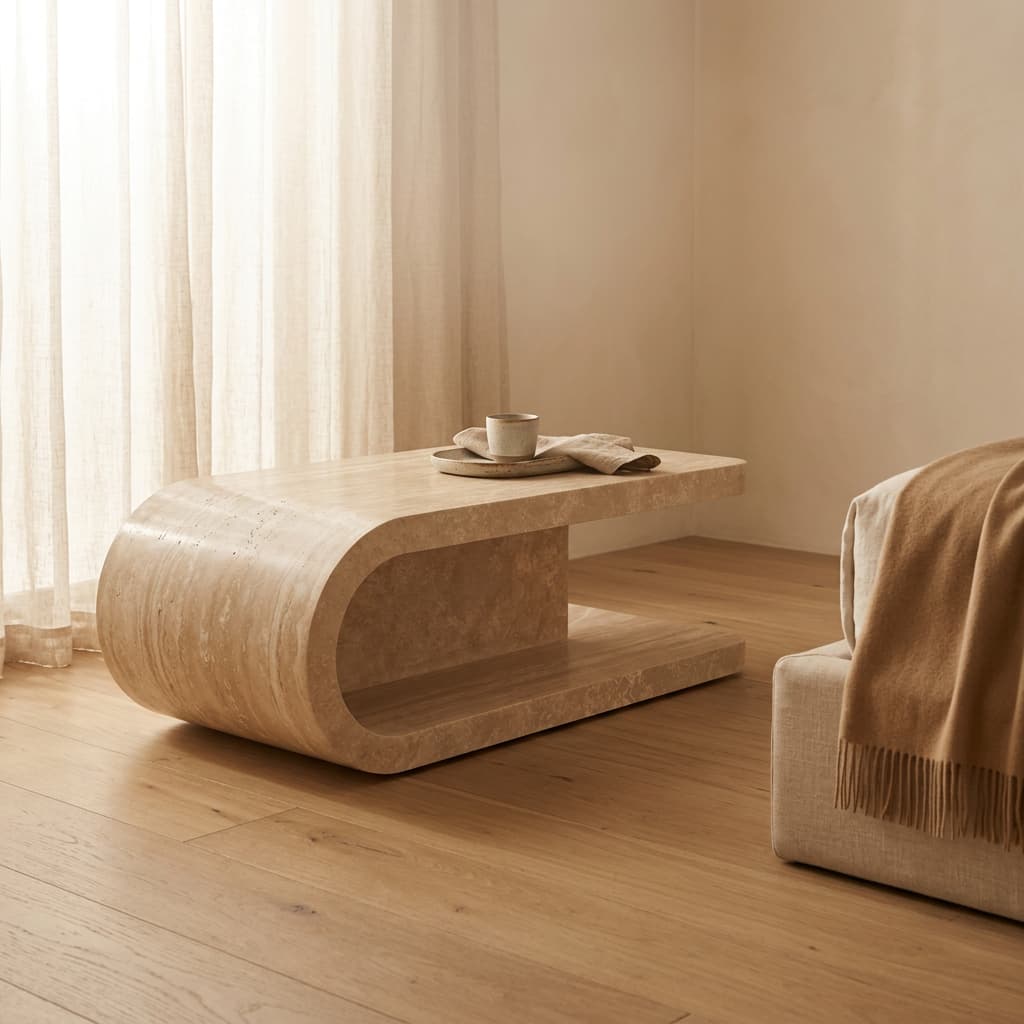
An open-void top is a different specification from the two above: here the holes are the figure, so it belongs where the surface is read across a room rather than worked on - hotel lobbies, lounges, entrance halls and park pavilions, or the guest side of a home bar rather than the working side.
The condition is stated with the specification: a filled face is wiped, an open one is cleaned with a soft brush or a vacuum, and a spilled drink has somewhere to go the moment it lands, so an open top is placed where nothing is served across it. What the open face buys is depth, because at standing distance the voids read as shadow and the bedding figure reads through from behind them, so a guest meets the stone before reaching the piece. Put the same top behind a working bar and the figure that made it worth specifying becomes a maintenance item.
FAQ

Frequently Asked Questions (FAQ)
Should I choose filled or open-void travertine for a dining table?
Filled for a dining table. A cement or resin fill gives a surface that can be wiped down between meals, while open voids catch crumbs and hold liquid. Keep open-void for a centrepiece read across a room rather than eaten from, and declare the choice on the order.
What is the difference between cross-cut and vein-cut travertine for a table top?
Cross-cut slices across the bed and opens the figure into cloud, which is the classic travertine look. Vein-cut runs with the bed and gives straight parallel banding. Both are cut from the same block, so the direction has to be stated on the order.
Does a white travertine table top stain or etch, and does the sealer stop it?
Travertine is a calcite stone at Mohs 3 to 4, so acid from wine and lemon etches the surface and a sealer does not prevent that. Sealing stops staining and slows absorption at 0.5 to 2.5 percent, which is why every honed top ships sealed.
How heavy is a white travertine table top, and will the base be stable?
A 1200x700x20mm top is about 42 kg and a 30mm top about 63 kg at 2.45 g/cm3. The base footprint is checked against that weight and the overhang, and a counterweight or wider plinth is quoted where the top cantilevers.



China Direct-Source Stone Furniture Factory
Submit your furniture CAD drawings, custom dimension lists, or project specifications to receive a direct factory quotation and material samples within 24 hours.
Hot Tags: white travertine table, China white travertine table manufacturers, suppliers, factory